提示词
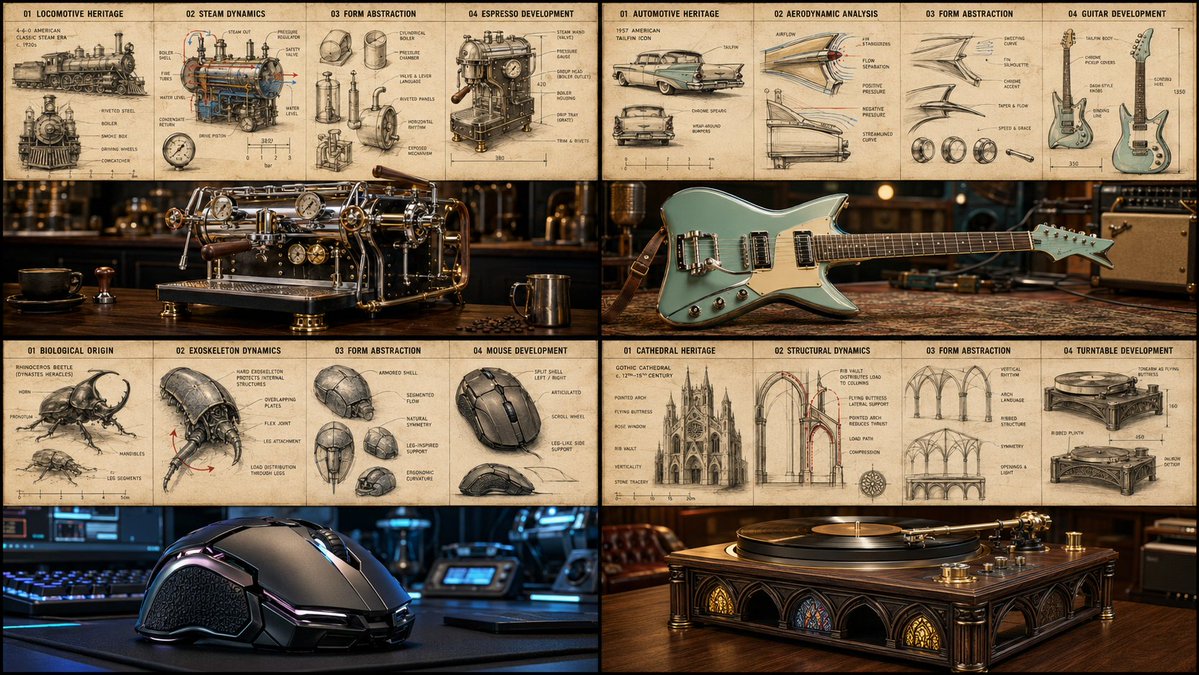
2x2 grid, 16:9, do this for 4 modern consumer products and the examples in input b<instruction> 1. Design: Input A is a Modern Consumer Product (e.g., Espresso Machine, Electric Guitar, Gaming Mouse, Turntable). Input B is an Historical Machine, Biological Organism, or Architecture serving as Inspiration (e.g., Steam Locomotive, 1950s Cadillac, Rhino Beetle, Gothic Cathedral). Deconstruct the pairing to generate 3 Engineering Assets : The Material Palette: Fuse the visual DNA of both inputs. (e.g., Espresso + Locomotive -> Polished Chrome, Brass Fittings, Riveted Walnut Wood. Guitar + Cadillac -> Seafoam enamel, tailfins, chrome bumpers). The Shared Mechanic: Identify a functional or visual bridge between the two. (e.g., Boilers/Steam pressure, Aerodynamic curves, Ergonomic joints). The Column Headers: Generate 4 technical titles for the blueprint phases (e.g., "01. [Input B] HERITAGE", "02. INTERNAL DYNAMICS", "03. FORM ABSTRACTION", "04. PRODUCT DEVELOPMENT"). 2. Container (The Evolution Diptych): Goal: "Concept-to-Reality" Industrial Design Board. The Format: A strict Horizontal Split-Screen (Top 50% / Bottom 50%). The Contrast: The Top is a flat, 2D vintage illustration; the Bottom is a hyper-realistic 3D photograph. 3. The Top Half (The Morphological Blueprint): The Canvas: Aged, yellowed, tea-stained drafting parchment. The Layout: Divided into 4 Vertical Columns showing the design evolution from left to right. Column 1 (Origin): Detailed pencil/ink draftsman sketches of Input B (The Inspiration). Column 2 (Analysis): Cross-section schematics of the "Shared Mechanic," featuring precise measurement lines, gauges, and red/blue directional arrows (heat/flow dynamics). Column 3 (Abstraction): Deconstructed, isolated geometric shapes (cylinders, curves) bridging the old and new forms. Column 4 (Synthesis): Master sketches of the final Product (Input A). Typography: Neat, capitalized architectural lettering for the "Column Headers" (Step 1) and dense, scribbled annotations. 4. The Bottom Half (The Reality Render): The Subject: A photorealistic, physical prototype of the Product (Input A), built entirely using the "Material Palette" (Step 1). It must look incredibly expensive and over-engineered. The Setting: The object sits on a polished surface (e.g., a dark wooden counter) in a contextual environment (e.g., a moody cafe, a vintage garage, a high-tech lab). The Background: Heavily blurred (shallow depth of field) to keep absolute focus on the product, featuring warm, glowing bokeh lights (like hanging Edison bulbs). 5. Visual : Top: Matte, dry, graphite and ink textures. Bottom: High-End Commercial Lighting. Sharp specular highlights catching the metallic curves (chrome, brass, or gloss paint) to emphasize the transition from flat sketch to 3D volume. Output: ONE image, Vertical Aspect Ratio (4:5), Split-Media Composite, "Industrial Design Presentation" aesthetic, Masterpiece Quality. </instruction>
中文版
相关推荐

Industrial retrospection, 1920s steam locomotive engine schematics shaping a hig
![[$inspiration] = b2 plane [$product] = high-end commercial k](https://img.xuyi.dev/x-prompts/20260502/gdgtify-2050622596522410056-1.jpg)
[$inspiration] = b2 plane [$product] = high-end commercial kitchen appliance inf

A vertical 9:16 multi-stage industrial design process visualization of a modern
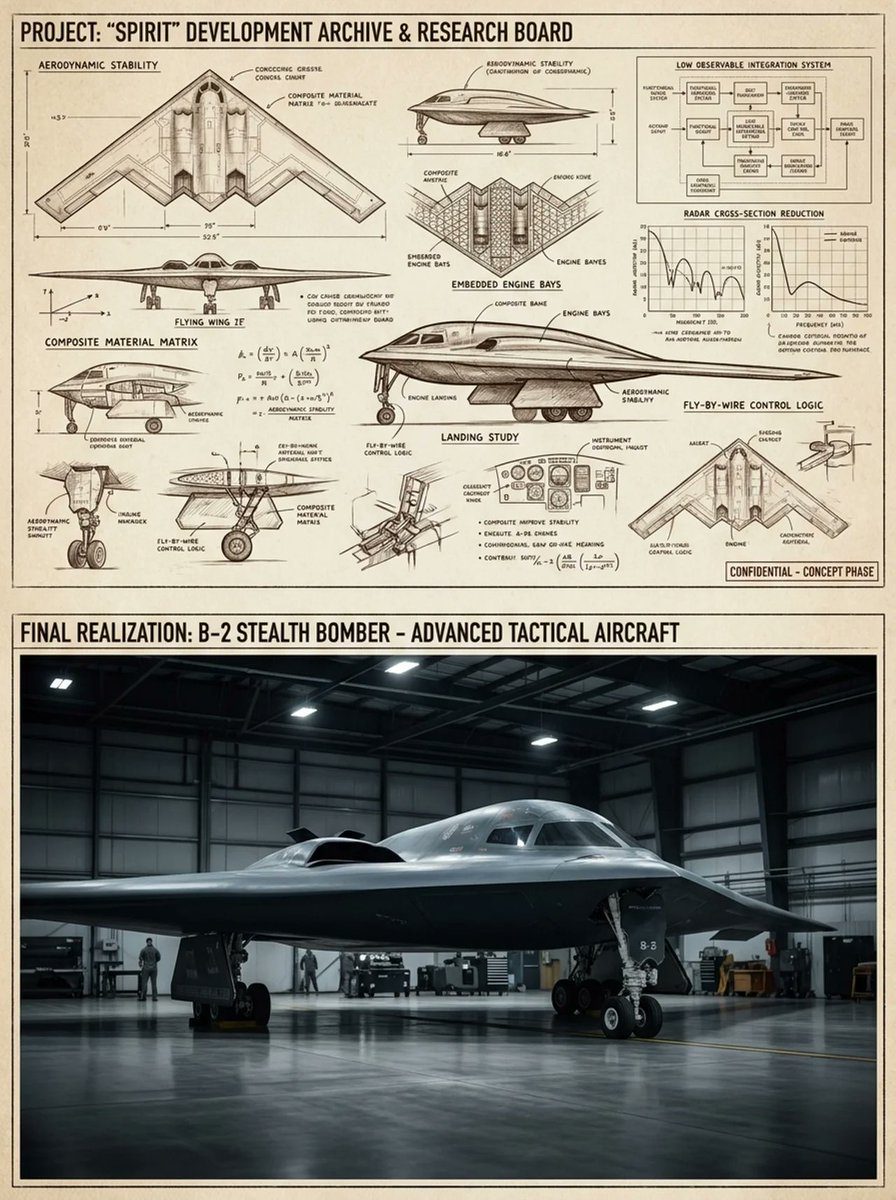
A product design board prompt for Nano Banana. Do this for B2 plane: inputs ::